
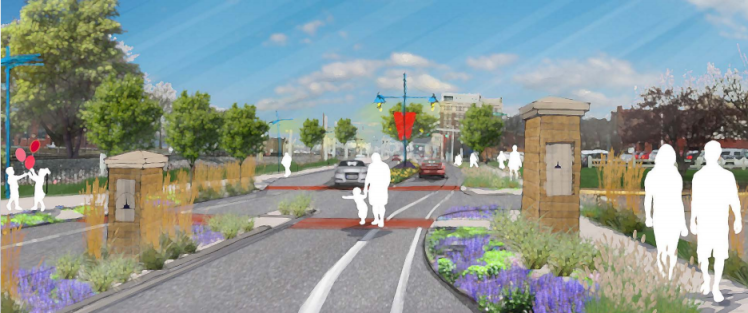
The vision began with a thought to transform a riverfront filled with old buildings, grain bins, and a switchyard into a park that the citizens of Muscatine could be proud of and visitors would want to make a destination. Out of that, according to Steve Boka, former Community Development Director for the City of Muscatine, came the realization of a strong connection between the riverfront and Downtown Muscatine, and the need for a safer Mississippi Drive.
“The thought was that once we embarked on creating this park, that would create interest in redevelopment of our downtown,” Boka said. “At that time there was not much going on in the second stories of our downtown.”
The vision expanded with the realization that the park would attract people to the area and that would ignite investment into the downtown area. But to get from the park to downtown people needed a safe…
View original post 1,079 more words
 This “hidden” message was unique in retrospect as I realized that it was during this time period that the affordability of the automobile led to the ability to travel greater distances which ultimately aided in the creation of great gathering places called shopping malls.
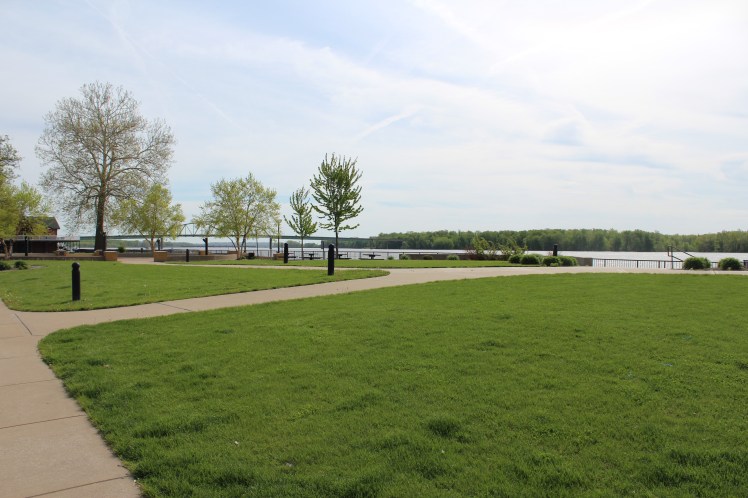 Green spaces like this one at Riverfront Park allow individuals to enjoy social interaction and nature along the banks of the Mississippi River. The wide sidewalks, sitting areas, play areas, and landscaping add to the walkable nature of the park. These and similar concepts will be used as the City of Muscatine continues its efforts to transform the downtown business district and other areas of the community into more pedestrian friendly gathering places.
  Anyone who travels across the Norbert F. Beckey Bridge that carries traffic over the Mississippi River from Illinois Highway 92 to Iowa Highway 92 is treated to a spectacular view of the Muscatine riverfront just downstream from the bridge. There are few river towns that can claim to have such a wondrous entrance to their city yet Muscatine knows the best is yet to come.

 Gregg Mandsager